
USFans T-Shirts: Choose the Cut Before Comparing the Print
A T-shirt can look right in a collection and still be the wrong shape for how you dress. Before comparing USFans T-shirt finds, decide whether you want a base layer, a standalone top or a looser piece to wear over trousers. That choice tells you which measurements and details deserve attention.
Use the category to find candidates, then open each product separately. A category thumbnail does not establish the size, selected colour or price of the option you intend to buy.
Start with the T-shirt you already reach for
Choose a reference garment that serves the same purpose as the new one. Compare its body length, flat chest width and sleeve shape with the listing's defined measurements. A shirt used under a jacket may not be the right reference for a deliberately oversized summer top.
Write down what you want to change. Perhaps the reference is a comfortable width but too long, or the sleeves work but the neckline does not. That is more useful than choosing a different size letter and hoping every dimension changes in your favour.
The size guide explains why flat width, circumference and body measurements cannot be substituted for one another. Keep the measurement endpoints and units consistent.
Look at a specific candidate
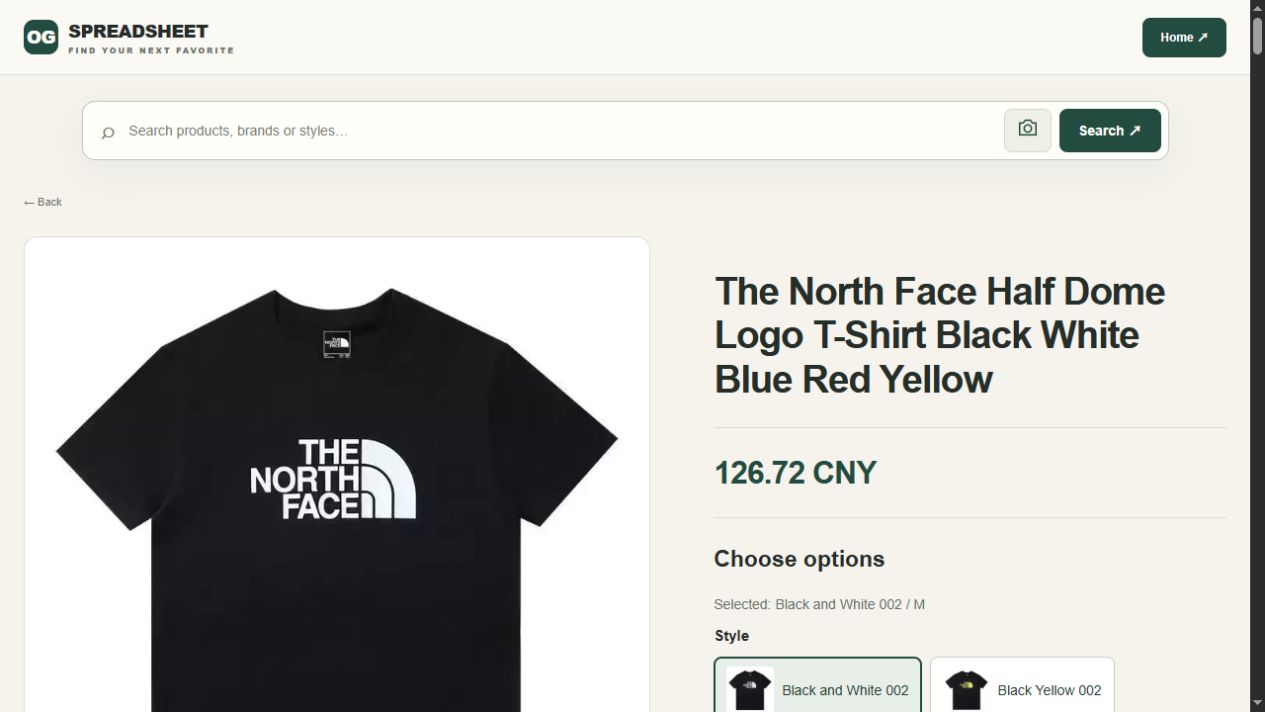
You can inspect this T-shirt on USFans while building your comparison. Check its selected option and the information actually supplied on the page. Its photograph does not establish fabric weight, softness, shrinkage or the fit on your body.
If a material detail matters, find the explicit information for that option. Do not treat the thickness suggested by a photograph as a fabric specification. Likewise, a name or visible brand mark is not authentication.
Compare placement as well as design
For a printed shirt, consider where the design sits relative to the neckline and hem. A close-up may show the graphic clearly while hiding its position on the whole garment. Keep a full view with any detailed image when comparing the layout.
If you later receive order-specific photos, first match the colour, label and product to your selection. Then ask about a precise visible detail, such as whether a mark near the hem is a fold or damage. The QC guide helps distinguish that observation from a prediction about how the print will survive washing.
Avoid collecting the same role repeatedly
Several similar T-shirts can make a shortlist look varied without adding useful choices. Compare the colour and cut with clothes you already own. If two candidates serve the same outfit, keep them as alternatives until you have a reason to want both.
Save the product destination, selected size and deciding measurement together. Use the links guide when similar images make it difficult to distinguish listings. Do not carry one seller's chart across to a different product.
Move from selection to ordering
Before proceeding, be able to explain why this shirt suits the role you identified. Confirm the option, quantity and amount shown for it. Keep a product price separate from the later packed-parcel calculation; the shirt's appearance cannot supply its shipping weight.
Continue with the ordering guide once the item is clear. A larger collection or an appealing print should not replace an unresolved fit question.