
USFans Size Guide: Compare Measurements Before Choosing a Label
A USFans size guide should help you choose the option for a particular product, not translate every item into one universal size. Start with the exact listing and its measurement description. The same letter on two different garments does not establish that they have the same dimensions or will fit the same way.
Decide how you intend to wear the item before comparing numbers. A jacket over a sweatshirt and a T-shirt worn on its own involve different choices. Keep that purpose beside your shortlisted option so you do not choose only because the label sounds familiar.
Identify what the chart measures
Before using a size chart, check three things: the item it belongs to, the unit, and the meaning of each dimension. A body-size recommendation and a finished-garment measurement are different kinds of information.
For a garment measurement, inspect the stated starting and ending points. Chest width, shoulder width, sleeve length and total length are not substitutes for one another. If the chart uses a diagram, follow that diagram when measuring a comparison garment rather than assuming your usual method matches.
| Chart detail | What to establish before comparing |
|---|---|
| Unit | Whether the values are centimetres, inches or another stated unit |
| Width or circumference | Whether the number describes a flat distance or a measurement around something |
| Length endpoints | Where the measurement starts and finishes |
| Product option | Whether the chart applies to the specific garment or version selected |
| Body or garment | Whether the value is a recommendation for the wearer or a dimension of the item |
If the chart does not explain a detail that affects your choice, ask about that detail before buying. Guessing the meaning of a column can undermine an otherwise careful comparison.
Use a comparison garment that serves the same purpose
Choose a garment you already wear comfortably in the way you intend to use the new one. Measure it according to the listing's method where that method is clear. Compare the dimensions relevant to your decision, not just the one number closest to your preferred label.
For example, a hypothetical jacket you use may measure 56 centimetres across the chest when laid flat. A candidate chart may show 54 centimetres using the same endpoints and method. The candidate is 2 centimetres narrower in that comparison. This does not by itself predict whether it will fit: construction, shape and how you intend to layer it still matter.
It would also be wrong to compare the 54-centimetre flat width directly with a body circumference and treat the difference as a fit result. Keep the measurement type consistent. If you convert units, convert both values into the same unit before comparing them.
Check more than the largest measurement
A garment can have enough width for your intended use while another dimension does not suit you. Consider the combination that matters for the item. For an outer layer, that may include shoulder, sleeve and body length as well as chest width. For trousers, examine how the listing defines waist, rise and length instead of treating a single size label as a complete answer.
Do not automatically choose a larger option because one dimension is unclear. Moving to another size may change other dimensions too. Identify the unresolved question and check that particular part of the chart or listing.
If you are comparing a lower-half option, inspect these wide-leg jeans on USFans. Use their own selected option and available measurements. This link is a candidate for browsing, not a measured example or a fit recommendation for your body.
Treat sets as separate pieces where needed
A set photograph may show a top and a bottom, but the selection may not allow the same flexibility as purchasing them separately. Check which pieces are included and whether their sizes can be chosen independently before assuming the whole set meets your needs.
In a hypothetical comparison, a top's dimensions may suit your intended fit while the bottom's length does not. That is a reason to reconsider the selection or ask about available options, not to assume the bottom will match because the top does.
The sets guide covers included-piece questions. Use the spreadsheet link guide if a saved link opens the product but loses the option you were comparing.
Footwear needs its own chart
Do not carry a garment-sizing habit into shoes. Check the sizing system, model and measurement guidance given for that particular footwear listing. A number without its system or context is an incomplete reference.
Likewise, do not assume an insole measurement, a foot-length recommendation and an outsole measurement mean the same thing. If the listing uses one, compare it according to its stated guidance rather than substituting another. Read the shoe guide for the product-selection questions that accompany sizing.
Separate a size label from a received-item measurement
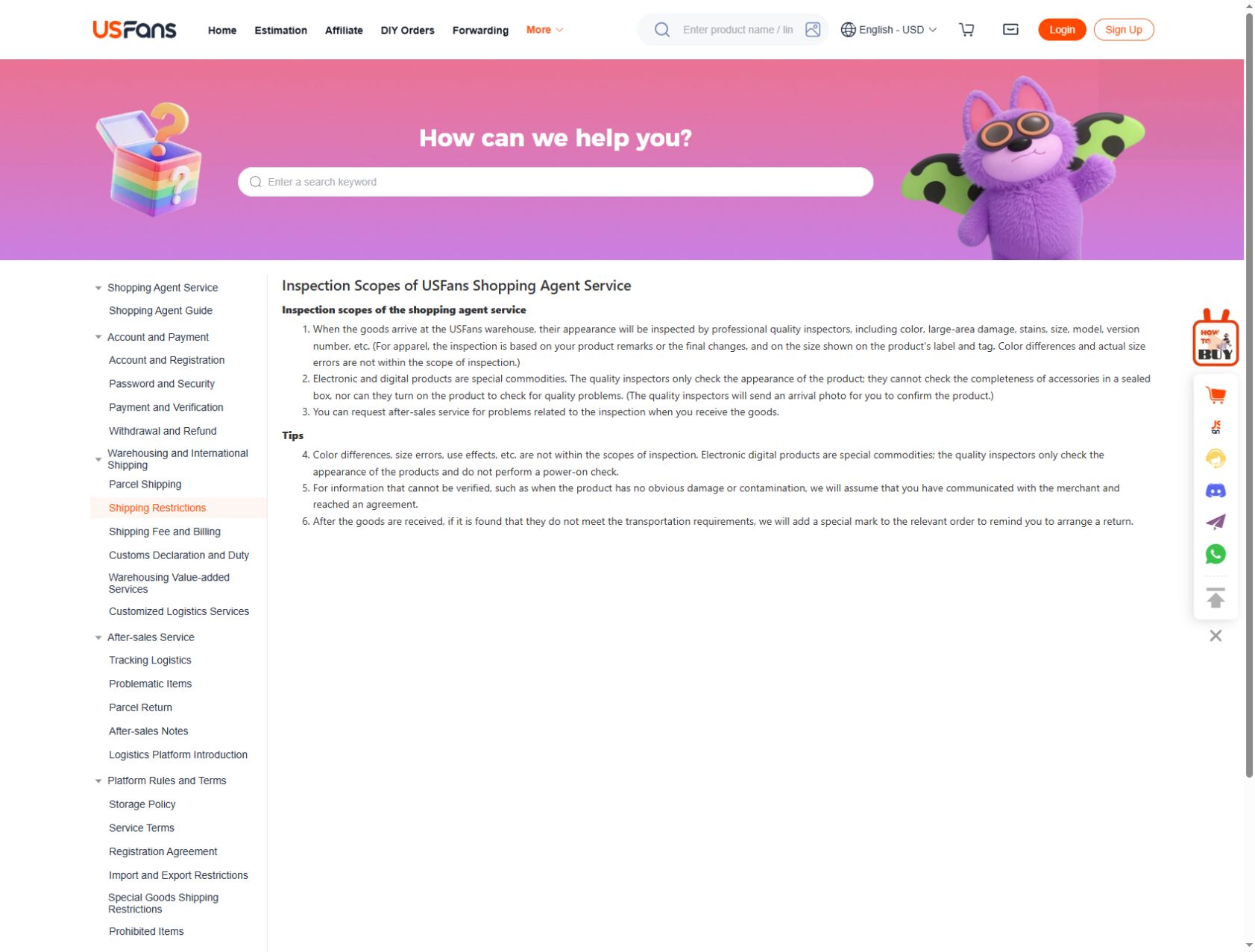
At the warehouse stage, a readable tag may help confirm which labelled size arrived. It does not establish all of the garment's actual dimensions. If the decision depends on a particular measurement, check whether an appropriate measurement view is available and what the service would include.
Ask a focused question, such as which endpoints were used for the sleeve length. A photograph with an unclear ruler or hidden starting point can leave the same uncertainty as an unexplained number. The QC guide explains how to connect an image to a specific visible question.
Avoid treating a successful label check as a guarantee of comfort or use. Those outcomes are not established by the tag alone. If the received information changes your decision, inspect the current handling options before proceeding with the parcel.
In the inspection rules checked on 30 September 2026, USFans compares clothing labels with the applicable selection or remarks, while actual size errors and colour differences remain outside the stated scope. A label result therefore cannot supply the missing sleeve length or jeans measurement; define that separate request using the same endpoints as your comparison garment.
Keep the choice attached to the order
Once you choose an option, save the product reference, selected size and the relevant chart information privately. If you change the product or variant, revisit the measurement comparison. Do not attach a chart from a previous candidate to the replacement just because both items use the same size letters.
Before submitting the request, check that the selected option matches your note. The ordering guide covers that transition. If you later need clarification, a precise explanation of the measurement and intended option is more useful than asking whether a garment is simply “true to size.”
Should I always size up when using USFans?
There is no universal choice that fits every product. Compare the specific listing and the dimensions relevant to how you plan to wear the item.
Can height and weight alone select my size?
They do not describe every relevant proportion or preference. Use the product's measurement guidance and a suitable comparison rather than treating two numbers as a complete fit prediction.
Does the size tag prove the measurements are correct?
No. It identifies a labelled option. Actual measurements and their method are separate information.