
USFans Hoodies and Sweaters: Plan the Layers Around the Garment
Choose a USFans hoodie or sweater by thinking about the clothes that will sit above and below it. A layer worn over a T-shirt has a different job from one squeezed beneath a fitted jacket. Before choosing a colour, decide where the garment belongs in that combination.
Browse hoodies and sweaters on USFans
Keep a few candidates with different useful features rather than many near-identical thumbnails. A category groups styles for browsing; it does not establish the fabric or measurements of every item inside it.
Check the neckline and hood together
Picture the garment with the jacket you actually use. If both have hoods, consider whether you want that combination. A crewneck removes the second hood, while a zip opening changes how you can wear the layer during the day. These are design choices, not a ranking of which style is universally best.
Look at the front and back views before deciding. A close-up of a graphic can hide the hood's shape or the garment's overall length. Do not infer how comfortably it layers from a single styled pose.
Compare a named find with its actual option
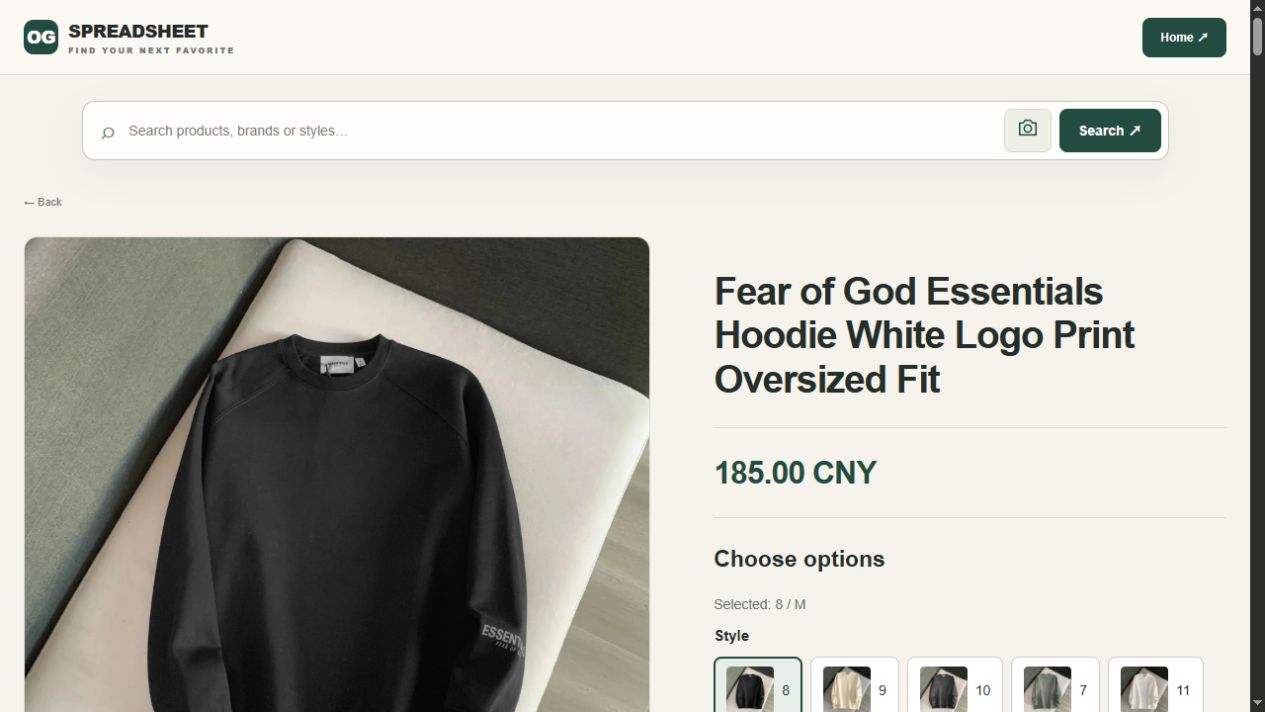
Searches for USFans Essentials or USFans Nike Tech can lead to different tops, bottoms or coordinated sets. Identify the particular garment rather than transferring a size recommendation across everything with the same name.
For an option-level comparison, open this Essentials-labelled layer on USFans. Style 8 / M showed a black crewneck on 1 October 2026, not the light-coloured hoodie described by the heading. Check the chosen neckline and dimensions; the photograph cannot establish warmth or softness.
If you are comparing a set instead of one top, confirm its included garments. Keep a separate size question for each piece; a suitable hoodie does not resolve the fit of matching bottoms.
Measure with your intended base layer in mind
Use a similar garment you already wear as a reference. Compare body width, body length and sleeves according to the listing's measurement method. A loose chest does not compensate for a sleeve that ends where you do not want it.
Consider cuffs and hem as part of the silhouette. A gathered hem can sit differently from a straight one even when the listed body lengths are close. Treat the measurement as information to interpret alongside the shape, not a promise of an identical fit.
The size guide helps keep flat measurements and body measurements separate. Do not automatically size up because the product is described as oversized.
Use detailed images for a defined concern
For a zip-up, a useful question might concern the visible fastening alignment. For a pullover, you may want a clearer view of the neckline or cuff stitching. For knitwear, identify the suspected snag instead of asking for another distant whole-item picture.
Match later images to your own selected item before drawing conclusions. A neat visible seam does not establish fibre composition, resistance to pilling or performance after washing. The QC photo guide explains those limits.
Decide what earns a place in the wardrobe
Compare the candidate with the layers you already own. Does it provide a different opening, length or outfit combination that you actually need? If the only distinction is another attractive thumbnail, keep it as an alternative rather than automatically adding it to the order.
Save the selected option and deciding measurements through the links guide. Review any care information relevant to your intended use, then use the ordering guide for the remaining purchase steps.