
USFans Haul: Compare the Items Before Copying the Parcel
A USFans haul can introduce several finds at once, but copying every item in a video also copies choices made for someone else's wardrobe. Begin by identifying which pieces solve a need for you. Then separate what the creator actually received from what they expected, ordered or merely saved.
For each item you might copy, note three things: the creator's selected variant, the stage their photographs show, and the question that still matters for your own choice. Leave out a piece if you cannot identify it clearly enough to compare.
A dated haul example: visible items and reported experience
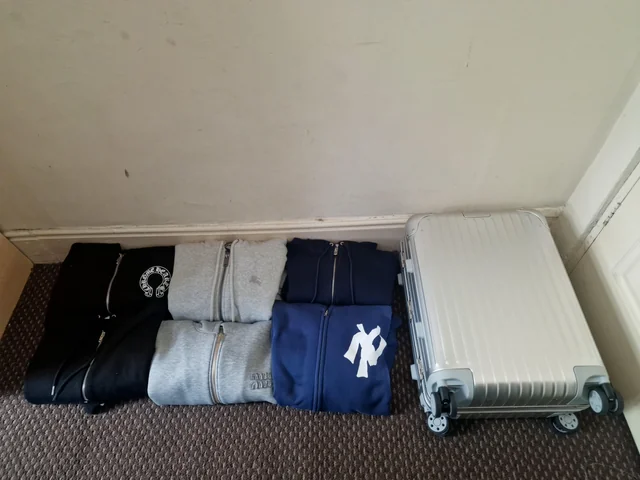
A real example is a Reddit UK haul dated 5 June 2026, with six folded zip-front tops beside a silver-coloured suitcase. The writer reports receipt and says the suitcase still needs a travel test. This lets you distinguish the visible assortment from a functional conclusion. Neither the photo nor the report establishes the fit of the separate OG candidate discussed below.
Make an item list before judging the overall impression
For each interesting piece, retain the product reference, selected option and the detail that caught your attention. A montage may move too quickly to establish which size or colour belongs to which link.
Do not treat a positive overall reaction as a review of every item. A creator may discuss a jacket in detail while barely showing the trousers. Keep those observations separate rather than giving both the same confidence.
For a jacket candidate, open a jacket product page on USFans Spreadsheet, then compare the option and measurements with the item being discussed. Similar styling does not establish that two links lead to the same garment.
Identify the stage of the haul
A saved shopping list describes intentions. Warehouse photographs show a different stage from an unboxing at the delivery address. A later wear report can address questions an arrival photograph cannot.
Look for clear distinctions between those stages. A paid order does not establish delivery; an unboxing does not establish long-term durability. The review guide helps keep conclusions tied to the observation that supports them.
When a post changes after a problem is resolved, read the later explanation alongside the original claim. A cropped clip may omit that follow-up.
Compare sizing with your own reference pieces
Use a creator's size choice only in the context they provide. Even if you share a usual size label, differences in preferred fit and garment proportions may matter. Compare the individual chart with clothing you already wear rather than copying a size because the outfit looks balanced on screen.
If a haul includes a matching set, establish which pieces were actually selected and supplied. The set guide covers why the upper and lower garments need separate attention.
Do not copy a shipping total without its context
A parcel amount is meaningful only alongside the relevant contents, destination, service and packing assumptions. A total that includes a promotional deduction is not the same comparison as an undiscounted estimate.
Keep item spending separate from parcel costs. Do not infer what your own shipment would cost by multiplying another person's total by the number of garments. The shipping guide explains how to compare a consistent parcel question.
A delivery time also needs a start and end point. Time from parcel dispatch is different from time beginning with the first purchase.
Turn inspiration into a smaller, clearer shortlist
Choose the items you would still want without the excitement of the complete haul. For each one, write down the fit or option question that remains. If you cannot tell which product a creator used, ask before substituting a lookalike.
Save the useful references through the spreadsheet-links guide, then review your own QC photos when available. Another buyer's images can suggest what to inspect, but they are not evidence of the condition of your allocated items.